On this page (7)
Crypto in Kenya does not live in one city. A boda rider in Kisumu, a clearing agent in Mombasa and a developer in Kilimani all buy USDT the same way: through a P2P tradingPeer-to-peer: you buy crypto directly from another person and pay them via M-Pesa or bank; the platform only holds the coins in escrow. Glossary, paying a stranger by M-Pesa while the platform holds the coins in P2P escrowThe platform locks the seller's coins while you pay. Coins are released only when the seller confirms your M-Pesa payment arrived. Glossary. The app is the same. The reasons for using it, the amounts and the way people get back to cash are not.
This hub collects our guides to four of Kenya’s biggest cities — Nairobi, Mombasa, Kisumu and Nakuru — and explains what genuinely changes when you leave the capital. If you have never bought crypto before, start with how to buy crypto with M-Pesa and come back here for the local picture.
Interactive map
Tap a city on the map to see what its guide covers, then open the full page. The pins mark the four cities we cover: Nairobi, Mombasa, Kisumu and Nakuru, which became Kenya’s fourth city when it received its charter in December 2021.
Nairobi
The capital and the centre of Kenya's "Silicon Savannah": most P2P merchants, crypto start-ups and meetups are here.
- Busiest P2P market and where merchants operate
- Tech hubs, meetups and crypto communities
- Cash-out options from Westlands to the CBD
Mombasa
Kenya's port city, where importers, clearing agents and the tourism economy shape how people use USDT.
- Paying foreign suppliers in USDT vs bank transfers
- Tourism, diaspora money and the coast economy
- Common scams targeting traders at the coast
Kisumu
The lakeside hub of western Kenya, close to the Uganda border, where remittances and small traders drive demand.
- Cross-border trade with Uganda and stablecoins
- Diaspora remittances into the lake region
- Finding reliable cash-out away from Nairobi
Nakuru
Rift Valley city with a farming economy and fast-growing population, where M-Pesa is the default way to pay.
- Farmers, SACCOs and crypto: what fits and what does not
- Using M-Pesa P2P outside the capital
- Renewable energy and Bitcoin mining in the Rift
The map is deliberately simple. Crypto activity is not tracked by county — no Kenyan regulator publishes on-chain or P2P figures broken down by town, and the Central Bank’s remittance data is only split by where money comes from (North America, Europe, rest of the world), not where it lands. So where we talk about “how people use crypto” in a city, we tie it to that city’s real economy and say clearly when something is a use case rather than a measured trend.
What changes from city to city
Think of crypto in Kenya like the matatu network. The vehicles, fares and rules of the road are the same everywhere, but the routes people take — and where they get off — depend on where they live and work. Five things really vary between towns.
P2P liquidity: the same everywhere, in practice
LiquidityHow easily you can buy or sell without moving the price. High liquidity means tighter spreads. Glossary on a P2P marketplace is national. When you open Binance, Bybit or OKX P2P and filter for KES and M-Pesa, you see sellers from all over the country, and the platform does not show you where they are. A merchant in Nairobi can fill a Kisumu buyer’s order in two minutes because M-Pesa moves money instantly between any two lines. That is why prices do not have a “Nairobi rate” and an “up-country rate”. Our P2P guide explains how to pick a reliable merchant.
Agent density and cash in hand
Where cities differ is the last step: turning M-Pesa into physical cash. Every town in this hub has M-Pesa agents on almost every street, but a small kiosk agent may only hold a few thousand shillings of float. If you sell KSh 80,000 of USDT and want it all in cash today, you may need a bank branch, a larger agent in the town centre, or two or three agents. In Nairobi that is a five-minute walk; in a Nakuru or Kisumu estate it may mean a trip into town.
Banking access
Equity, KCB and Co-op Bank have branches in all four cities, and many P2P sellers accept bank transfers for larger tickets. Nairobi has the widest choice of banks and the main offices of most of them, which matters if a compliance team wants to talk to you face to face about where money came from. We cover how banks treat crypto-linked transfers in crypto-friendly banks in Kenya.
Business uses
This is the biggest difference. An IMF technical assistance report on Kenya noted anecdotal evidence that domestic companies use StablecoinA crypto token designed to stay at a fixed value, usually 1 US dollar. USDT and USDC are the best known. Glossary such as USDT to settle contracts with foreign suppliers, while crypto use for domestic payments seems to be very limited. Where that kind of business payment exists, it follows the trade routes: import-heavy Mombasa, Nairobi’s wholesalers, and border trade in the west.
Who is using it
In Nairobi you meet freelancers paid in USDT, developers and start-up staff. At the coast, traders and people working around tourism. Around the lake, families receiving money from relatives abroad and small traders dealing with Uganda. In the Rift Valley, farming households, SACCO members and chama treasurers — who are also the people scam promoters target.
The four cities compared
Population figures are county totals from the Kenya National Bureau of Statistics’ 2019 census, the most recent official count. City-proper numbers are smaller, especially for Kisumu and Nakuru, whose counties include large rural areas.
| City | County population (2019 census) | Main economic drivers | Typical crypto use cases |
|---|---|---|---|
| Nairobi | 4,397,073 | Services, finance, government, tech | Freelancer USDT income, P2P merchants, start-ups, savings in dollars |
| Mombasa | 1,208,333 | Port and logistics, tourism, trade | Importer supplier payments (use case), tourism and diaspora income |
| Kisumu | 1,155,574 | Lake trade and fishing, sugar, rice, services | Diaspora money, cross-border trade with Uganda, small-trader savings |
| Nakuru | 2,162,202 | Farming, agro-processing, geothermal at Olkaria | Farm and remittance income, chama savings, high Ponzi risk |
A few notes on the table. Nakuru County is the third most populous county in Kenya, larger than Mombasa or Kisumu, but much of that population is rural. The “use cases” column is what each economy makes likely, not a measured breakdown — nobody publishes crypto statistics by county. Each city guide explains the reasoning and the local caveats.

City guides
Each guide is built around that city’s own economy, not a copy of the others. Here is what you will find in each.
Crypto in Nairobi — the “Silicon Savannah”: iHub and the tech scene, why most crypto start-ups and communities sit in the capital, the Bitcoin circular economy project in Kibera, and how cash-out works between Westlands, the CBD and the estates. Also the scams reported in the city.
Crypto in Mombasa — the port economy and why some importers look at USDT to pay suppliers in China, the UAE or India, with the customs, KRA and anti-money-laundering caveats spelled out. Plus tourism income, diaspora money and risks specific to the coast.
Crypto in Kisumu — Lake Victoria trade, the road to Busia and Malaba, how a shilling-shilling-dollar triangle with Uganda works in practice, remittances into the lake region, and finding reliable cash-out away from Nairobi.
Crypto in Nakuru — farming money, SACCOs and chamas, why crypto Ponzi schemes love savings groups, and an honest look at geothermal power at Olkaria and whether anyone is mining Bitcoin with Kenyan renewables.
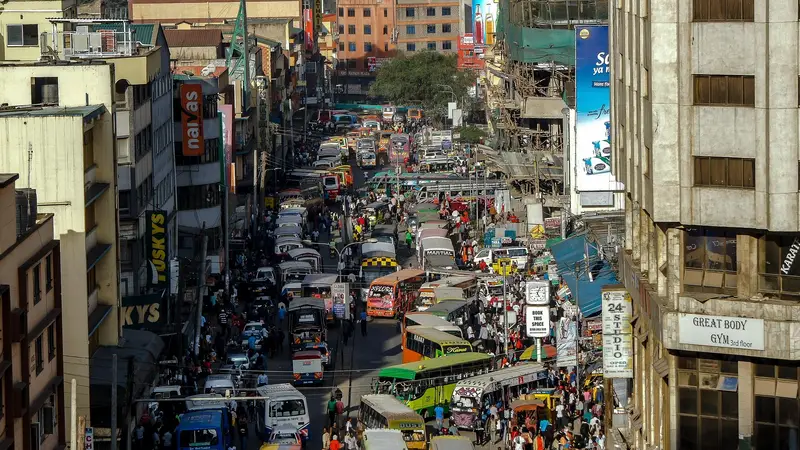
How people in Nairobi buy, use and cash out crypto: local P2P habits, M-Pesa and bank access, business use cases, communities and scams to watch for.
Read guide →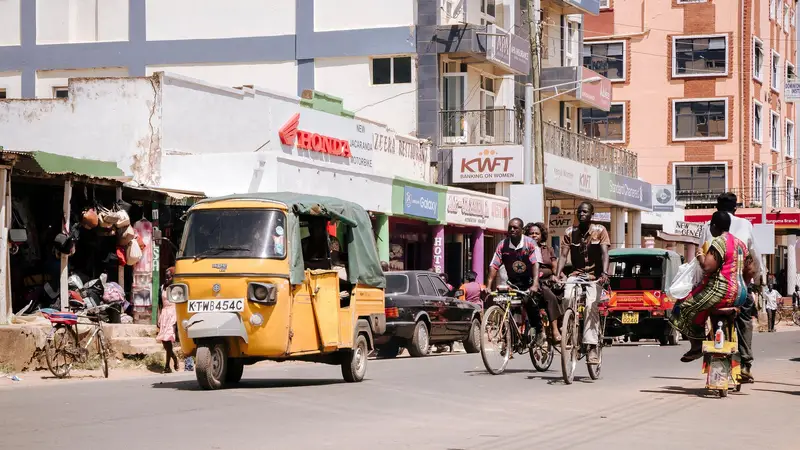
How people in Mombasa buy, use and cash out crypto: local P2P habits, M-Pesa and bank access, business use cases, communities and scams to watch for.
Read guide →
How people in Kisumu buy, use and cash out crypto: local P2P habits, M-Pesa and bank access, business use cases, communities and scams to watch for.
Read guide →
How people in Nakuru buy, use and cash out crypto: local P2P habits, M-Pesa and bank access, business use cases, communities and scams to watch for.
Read guide →Same app, any city
Open a free account, verify your ID and compare the exchange price with what P2P sellers in your town are asking.
Cash-out access outside Nairobi
Selling crypto for shillings works the same way in Nakuru as in Nairobi: you sell USDT to a P2P buyer, they send M-Pesa or a bank transfer to you, and you confirm receipt before the coins leave escrow. Our crypto to M-Pesa guide walks through the full process. What you need to plan for outside the capital is the step after that — getting physical cash, or moving larger sums.
| How you get cash | Cost on KSh 10,000 | Cost on KSh 50,000 | Best for |
|---|---|---|---|
| M-Pesa agent withdrawal | KSh 115 | KSh 278 | Everyday amounts, any estate or market |
| M-Pesa at a bank ATM | KSh 115 | Not possible in one go (ATM max KSh 35,000 per withdrawal) | Evenings and weekends in town centres |
| P2P buyer pays your bank account | Bank’s own charges | Bank’s own charges | Larger sales, keeping a clean paper trail |
| Keep it in M-Pesa and pay directly | KSh 0 to receive | KSh 0 to receive | Paying school fees, suppliers or bills by Paybill or Till |
Agent and ATM fees are Safaricom’s national consumer tariffs. Two things are worth knowing. M-Pesa caps a single transaction at KSh 250,000 and your daily total at KSh 500,000, so a large sale may need several days or a bank route. And the cheapest cash-out is often no cash-out at all: if you are paying a landlord, a school or a supplier who takes M-Pesa, leave the money in M-Pesa. Check every band on our M-Pesa charges calculator.
Is a walk-in “crypto office” safer up-country?
No. We could not verify any licensed walk-in crypto exchange in the four cities, and Kenya had no public register of licensed virtual asset service providers when this guide was updated. Offices or “agents” that take your cash and promise to send Bitcoin later offer no escrow and no recourse.
It is safer to buy from someone I can meet in person in my town.
Meeting in person removes the platform’s protection. On a P2P marketplace the seller’s coins are locked before you pay, and you have an appeal process if something goes wrong. In a café deal, you hand over M-Pesa or cash and hope. Most crypto losses we hear about in smaller towns start with a “trusted” local contact.
Risks that travel to every city
The details differ — import invoices at the coast, chama contributions in the Rift — but the same handful of mistakes cause most losses everywhere.
- Pay and receive only from an M-Pesa line or bank account in your own name; third-party payments freeze accounts.
- Never release coins until the shillings are in your M-Pesa balance, not just an SMS.
- Ignore anyone promising fixed daily or monthly returns on crypto, however well they know your chama.
- Keep trades inside the platform chat; leave if a seller moves you to WhatsApp or Telegram.
- Keep M-Pesa SMS, order numbers and bank slips — useful for disputes, banks and KRA questions.
- Check that the platform you use serves Kenya and watch for licensing news under the VASP Act.
For the patterns behind most losses, including M-Pesa reversal tricks on P2P, read crypto scams in Kenya. For a starting coin, most Kenyans use USDT, which tracks the US dollar and is the easiest coin to sell back for shillings.
How to use these guides
If you are new, read the guide for your own city first, then the general how-tos it links to. If you trade across towns — buying stock in Nairobi, selling in Kisumu, sending money home to Nakuru — read both ends. The steps for buying are identical everywhere; what changes is who you are likely to deal with, which scams are circulating, and how you turn the money back into something you can spend.
Kenya’s crypto rules are national. The VASP Act 2025 applies equally in all 47 counties, as does the tax treatment of crypto gains and platform fees. No county government regulates crypto, and no county office can give you a “crypto licence” — if someone shows you one, treat it as a warning sign.
Compare before you buy
Check the exchange price against P2P ads in your town before you send any M-Pesa.
Frequently asked questions
Which Kenyan city is best for buying crypto?
Can I cash out crypto outside Nairobi?
Are there physical crypto shops or Bitcoin ATMs in Kenyan cities?
Do M-Pesa charges differ between cities?
Is crypto legal in every Kenyan county?
Why does your city list stop at four towns?
- KNBS — 2019 Kenya Population and Housing Census, Volume I: Population by County and Sub-County
- Safaricom — M-PESA consumer tariffs and limits
- IMF — Kenya: Technical Assistance Report on crypto-asset activities
- Central Bank of Kenya — Diaspora remittances data
- HapaKenya — Nakuru awarded city charter, Kenya's fourth city
- Central Bank of Kenya — commencement of the VASP Act 2025