On this page (8)
Most people in Kenya meet crypto backwards. A friend makes money, a TikTok video promises more, someone shares a Telegram link, and the first thing you learn is how to send M-Pesa to a stranger. The understanding comes later — often after a loss. This hub turns that around. It collects our plain-English explainers in the order that makes sense, so you understand what you are buying before you buy it.
Every guide uses examples you already know. A blockchain is explained as a shared M-Pesa statement. A Private keyThe secret number that signs transactions from a wallet address. The seed phrase is a human-readable way to back it up. Glossary is compared to an M-Pesa PIN with no Safaricom shop to reset it. A StablecoinA crypto token designed to stay at a fixed value, usually 1 US dollar. USDT and USDC are the best known. Glossary is compared to a cloakroom ticket for a dollar. No prior knowledge is needed, and nothing here asks you to buy anything.
The core explainers
These five guides cover the ideas behind everything else on the site. If you only read five pages about crypto, make it these.

Cryptocurrency explained for Kenyans: how it differs from M-Pesa and bank money, the main types of coins, how people use it in Kenya and the risks.
Read guide →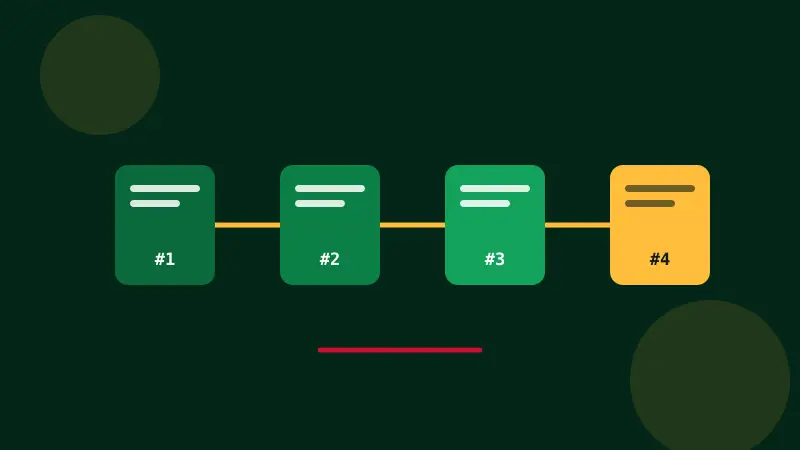
Blockchain explained simply with an M-Pesa statement analogy: blocks, miners, validators, public ledgers and real Kenyan uses beyond cryptocurrency.
Read guide →
What Bitcoin is, how it works, who controls it and why it has value — explained with M-Pesa comparisons, plus how Kenyans buy, store and mine it.
Read guide →
What stablecoins are, how USDT and USDC hold their dollar value, why Kenyans use them for savings and payments, and the risks behind the peg.
Read guide →
Telegram tap-to-earn games like Hamster Kombat explained for Kenyans: how airdrops work, what tokens are really worth, TON wallets and the scams around them.
Read guide →A four-week learning path
You do not need a course or a mentor. You need the right order and a bit of patience. Here is the path we would give a friend or a relative starting from zero.
| Week | Read | You should be able to… |
|---|---|---|
| Week 1 — The idea | What is cryptocurrency, then What is blockchain | Explain how crypto differs from M-Pesa, and why transfers cannot be reversed |
| Week 2 — The main coins | What is Bitcoin, What is a stablecoin, the coins hub | Say why Bitcoin swings in price, why USDT does not, and what can go wrong with each |
| Week 3 — Doing it safely | Beginner’s guide, wallet guide, crypto scams in Kenya | Make a small first purchase, store a seed phrase properly and spot a fake investment group |
| Week 4 — Rules and records | Crypto regulation in Kenya, crypto tax, tap-to-earn games | Know which platforms need a licence, what KRA expects, and how airdrop scams work |
Why this order? Because the dangerous mistakes are conceptual, not technical. Pressing “Buy” is easy. Knowing that a seed phrase typed into a website is gone forever, that a “guaranteed 2% daily” group is a Ponzi, or that USDT sent on the wrong Network (chain)The blockchain a transfer travels on. USDT exists on TRON (TRC20), BNB Smart Chain (BEP20), Ethereum (ERC20) and others — sender and receiver must pick the same one. Glossary may never come back — that is the part that protects your money.
What each explainer covers
Here is a quick map of the core guides, so you can jump to the one that answers your question today.
| Guide | The question it answers | Read it if… |
|---|---|---|
| What is cryptocurrency | How is crypto different from M-Pesa and bank money? What types of coins exist? | You are starting from zero |
| What is blockchain | How can thousands of strangers keep one honest ledger? | “Blockchain” still sounds like magic |
| What is Bitcoin | Who controls Bitcoin, why is it limited to 21 million, and why does the price swing? | You want to own Bitcoin or understand the news |
| What is a stablecoin | How do USDT and USDC hold one dollar, and is USDT safe? | You use P2P, get paid in USDT or want dollar savings |
| Hamster Kombat and tap-to-earn | What did Telegram games really pay, and how do airdrop scams work? | You played Notcoin or Hamster Kombat, or a new game is going round |
What is cryptocurrency
The starting point. It compares crypto with M-Pesa and bank money side by side, walks through what happens when you send coins, and sorts the thousands of coins into five types — Bitcoin, smart-contract platforms, stablecoins, memecoins and project tokens. It also explains how Kenyans actually use crypto: P2P tradingPeer-to-peer: you buy crypto directly from another person and pay them via M-Pesa or bank; the platform only holds the coins in escrow. Glossary trading with M-Pesa, freelance payments and family remittances.
What is blockchain
The engine under the bonnet. You will learn what is inside a block, how a hash works (with a real example using a Kamau-to-Wanjiru payment), and the difference between proof of work and proof of stake. It also lists verified Kenyan uses that have nothing to do with speculation, such as the Sarafu community currency, and is honest about the projects that never went beyond a pilot.
What is Bitcoin
The first and largest cryptocurrency, explained without the cult language. It covers the 21 million supply limit, the HalvingAn event roughly every four years that cuts the new bitcoin reward for miners in half. Glossary, mining (including the Gridless mini-grid sites in Murang’a), who Satoshi Nakamoto was or was not, and two real examples of how far the price has fallen from a peak.
What is a stablecoin
The most practical guide for Kenyans, because USDT is what most P2P traders actually swap for shillings. It explains fiat-backed, crypto-backed and algorithmic stablecoins, what happened when TerraUSD collapsed and when USDC briefly lost its peg, and how USDT and USDC compare on reserves and transparency.
Hamster Kombat and Telegram tap-to-earn
A reality check on the Telegram tap games. It explains how Notcoin and Hamster Kombat airdrops worked, what players actually received, the difference between Telegram’s custodial wallet and a self-custodial TON wallet, and the fake-airdrop scams that ask for seed phrases or “unlock fees”.
Learned the basics and ready to try?
Open a free account, verify your ID and practise with a small amount. Sending and selling KSh 500 teaches more than any video.
Beyond the basics: where to go next
Once the core explainers make sense, the rest of the site turns knowledge into practice.
- Coins. The coins hub has a page for each coin Kenyans ask about most — Bitcoin, USDT, Ethereum, Worldcoin, Pi Network and more — with live KES prices and the specific risks of each.
- Wallets. The wallet guide compares exchange accounts, phone wallets and hardware wallets, and shows how to back up a Seed phraseThe 12 or 24 secret words that can restore your wallet on any phone. Anyone who sees them can take everything. Never type them into a website or share them on WhatsApp. Glossary properly.
- Buying and selling. The P2P guide explains the M-Pesa marketplace step by step, and how to buy Bitcoin safely covers the checks to make before your first purchase.
- Law and tax. Crypto regulation in Kenya explains the VASP Act 2025 and who licenses what; crypto tax covers the excise duty on platform fees and what KRA expects on gains.
- Scams. Crypto scams in Kenya lists the schemes currently doing the rounds, from fake account managers to M-Pesa reversal tricks.

Common beginner myths
Many Kenyans arrive with ideas picked up from WhatsApp groups and videos. A few are worth clearing up before you start.
You need a lot of money to get into crypto.
You can buy a fraction of any coin. One bitcoin divides into 100 million satoshis, and many P2P ads start at a few hundred shillings. The amount does not change what you learn — but a small amount makes your mistakes cheap.
Crypto is illegal in Kenya.
It is not. Owning and trading crypto is legal. Since the VASP Act 2025 commenced in November 2025, businesses that exchange or hold crypto for customers need a licence from the Central Bank of Kenya or the Capital Markets Authority. The law targets platforms, not your right to own coins.
Someone experienced can manage my crypto and send me profits.
This is the single most common route to losing money. Real investments do not come with an “account manager” on WhatsApp who asks for your login or promises fixed daily returns. If someone else controls the account, they control the money.
Ground rules before you buy anything
Whatever you read on this site, these rules apply. Print them, screenshot them, share them with the family chama.
- Only invest money you could lose completely without changing your month.
- Never borrow to buy crypto — not Fuliza, not a digital loan app, not a SACCO loan.
- Never share your seed phrase or private key with anyone, including 'support staff'.
- Never pay a fee to withdraw, unlock or claim crypto.
- Always send a small test amount first and match the network on both sides.
- Keep records of every purchase and sale: M-Pesa SMS, order numbers and dates.
Five questions to ask of any crypto source
You will keep learning from other places too — friends, YouTube, X, Telegram channels. Before you trust any of them, ask: Does this person earn money if I sign up or buy? Do they promise a return, a “sure” coin or a fixed daily profit? Do they want me to move to a private WhatsApp or Telegram group? Do they ask for my login, seed phrase or an upfront fee? Can I check their claims against an official source? One “yes” to the first four, or a “no” to the last, is a reason to step back.
How we write these guides
Every explainer is written in plain English for Kenyan readers, with M-Pesa and shilling examples wherever possible. We check facts against primary sources — official documents, regulators, the projects themselves and reputable news reporting — and list them at the bottom of each page. When we cannot verify something, we say so rather than guess. We do not hard-code prices, because they change by the minute; use the live converters instead. And we do not tell you what to buy. Our job is to make sure that whatever you decide, you decide it with your eyes open.
If a term trips you up, the glossary has definitions with Kenyan examples. If you want a single practical walkthrough instead of five explainers, go straight to the beginner’s guide — then come back here when you want to understand why each step matters.