On this page (9)
- How Bitcoin works: a statement no single company controls
- The 21 million limit and the halving
- Bitcoin mining, and mining in Kenya
- Who created Bitcoin?
- Why does Bitcoin have value — and why critics disagree
- How volatile is Bitcoin? Two real examples
- How Kenyans buy and store Bitcoin
- Is Bitcoin legal in Kenya?
- Where to go next
Bitcoin is money that lives on the internet with no company in charge of it. There is no Bitcoin head office, no customer care line and no CEO who can reverse your payment. Instead, a public record of every transaction is copied across thousands of computers around the world, and a fixed set of rules decides who owns what. That is the whole idea — and it is both why people love it and why it is risky.
How Bitcoin works: a statement no single company controls
Picture your M-Pesa statement. It lists every payment in and out, and Safaricom keeps the master copy. If Safaricom made a mistake or decided to freeze your line, you would have to accept its version of events, because it alone controls the ledger.
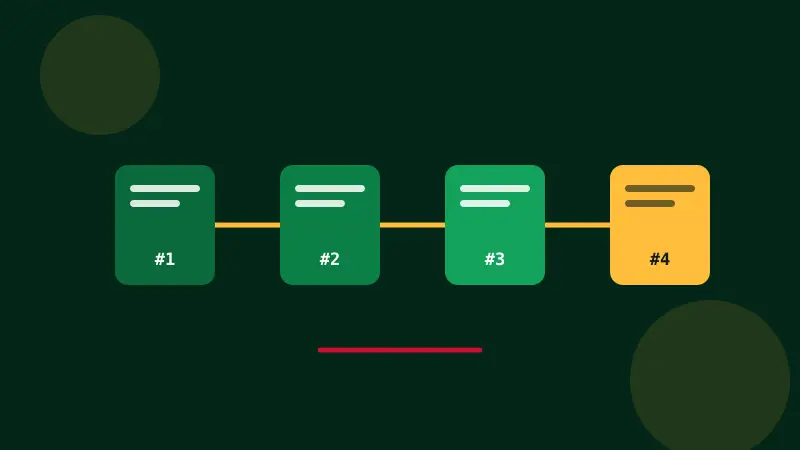
Bitcoin replaces that single master copy with a BlockchainA shared public record of transactions that many computers keep identical copies of, so no single company can quietly edit it. Glossary: one shared statement for the whole world, copied onto every computer that runs the Bitcoin software. Nobody can quietly edit it, because every copy checks every other copy. If one computer claims Kamau has 5 BTC when the rest of the network says he has 0.5, it is simply ignored.
Wallets, addresses and keys
To use Bitcoin you need a Crypto walletAn app or device that holds the keys to your crypto. The coins stay on the blockchain; the wallet proves they are yours. Glossary. It does not hold coins the way a leather wallet holds notes. It holds a Private keyThe secret number that signs transactions from a wallet address. The seed phrase is a human-readable way to back it up. Glossary — a secret number that proves you own the coins recorded at your Wallet addressThe public "account number" you share to receive crypto. It is safe to share; the seed phrase is not. Glossary. The address is like a till number you can share with anyone; the private key is like your M-Pesa PIN, except there is no Safaricom shop where you can reset it.
Most wallet apps turn that key into a 12- or 24-word Seed phraseThe 12 or 24 secret words that can restore your wallet on any phone. Anyone who sees them can take everything. Never type them into a website or share them on WhatsApp. Glossary. Whoever has those words has your bitcoin. Write them on paper, keep them offline, and never type them into a website or a WhatsApp chat.
Blocks and confirmations
When you send bitcoin, your wallet signs the payment and broadcasts it to the network. Miners collect waiting payments and package them into a block roughly every ten minutes. Once a block containing your payment is added to the chain, it has one ConfirmationEach new block added after your transaction. Exchanges credit deposits after a set number of confirmations. Glossary. Each later block adds another, and after a few the payment is, in practice, permanent.
| M-Pesa | Bitcoin | |
|---|---|---|
| Who keeps the ledger | Safaricom | Thousands of independent computers |
| Who can freeze or reverse | Safaricom, on request or court order | Nobody at network level |
| Opening hours | 24/7, with maintenance windows | 24/7, no maintenance window |
| Supply of money | Shillings issued by the CBK | Fixed schedule, capped at 21 million |
| Identity | Registered SIM, National ID | Address only; exchanges add ID checks |
That last row matters. Bitcoin itself does not ask for your ID, but almost every place where shillings meet bitcoin — exchanges, P2P marketplaces — runs KYCKnow Your Customer: identity checks (ID or passport, selfie, sometimes proof of address) that regulated platforms must run before you trade. Glossary checks. Bitcoin is pseudonymous, not anonymous: every payment is visible on the public ledger forever.
The 21 million limit and the halving
The Kenya shilling has no hard cap: the Central Bank of Kenya decides how much money the economy needs. Bitcoin works the other way. Its software allows a maximum of 21 million coins, and the release schedule is written into the code.
New bitcoins are created as a reward for the miner who adds each block. Every 210,000 blocks — about four years — that reward is cut in half. This event is called the HalvingAn event roughly every four years that cuts the new bitcoin reward for miners in half. Glossary, and it is the reason Bitcoin is often described as “digital gold”: new supply gets scarcer over time, the way gold gets harder to dig out.
| Period | Reward per block | What happened |
|---|---|---|
| January 2009 – November 2012 | 50 BTC | Launch; first coins mined |
| November 2012 – July 2016 | 25 BTC | First halving |
| July 2016 – May 2020 | 12.5 BTC | Second halving |
| May 2020 – April 2024 | 6.25 BTC | Third halving |
| From 20 April 2024 | 3.125 BTC | Fourth halving, block 840,000 |
| Expected around 2028 | 1.5625 BTC | Fifth halving, block 1,050,000 |
Because the reward keeps halving, the last tiny fractions of the 21 million are expected to be issued around 2140. Some coins will never move again because their owners lost the keys, so the number actually available is lower than the number issued — nobody knows exactly how much lower.
The halving always makes the price go up.
Past halvings were followed by price rises, but they were also followed by deep crashes, and four examples are far too few to call it a rule. The halving changes new supply, not demand. Treat any video promising “guaranteed post-halving gains” as marketing.
Bitcoin mining, and mining in Kenya
MiningUsing computers to secure the Bitcoin network in exchange for newly created bitcoin and fees. Glossary is how new blocks are added. Specialised machines called ASICs race to solve a maths puzzle; the first to find a valid answer adds the next block and earns the reward plus the fees in it. The puzzle is hard on purpose. Rewriting old blocks would mean redoing all that work faster than the rest of the world combined, which is what makes the ledger so hard to cheat.
The cost is electricity. Mining machines run 24 hours a day, and with the reward now at 3.125 BTC per block, miners compete for less new bitcoin than ever. For a household on normal Kenya Power tariffs, a single machine usually burns more shillings in electricity than it earns. That is why serious miners chase the cheapest power they can find.
In Kenya, the best-known example is Gridless, a start-up that places mining machines at small hydro mini-grids in rural areas. When CNBC reported on it in December 2022, Gridless had three pilot sites in Murang’a County and had raised a US$2 million seed round led by Stillmark and Jack Dorsey’s company Block. The model: mini-grid operators often produce more power than villagers can use, so the mining machines buy the surplus and give the operator a steady customer, which can help keep power cheaper for homes. By 2025, the Christian Science Monitor described six Gridless sites across Kenya, Malawi and Zambia. We could not find an official, up-to-date list of Gridless sites by county, so we do not name others.
Who created Bitcoin?
Bitcoin was described in a nine-page paper titled Bitcoin: A Peer-to-Peer Electronic Cash System, published on 31 October 2008 under the name Satoshi Nakamoto. The first block — the “genesis block” — was mined on 3 January 2009. Satoshi worked on the software with early volunteers, then stopped posting publicly around 2010–2011 and handed the project over to other developers.
Nobody has proven who Satoshi is. Several people have claimed the title or been named by journalists, and none has been confirmed. For users, this is less important than it sounds: Bitcoin’s rules are enforced by the software people choose to run, not by its creator, and no single developer can change them alone.
Why does Bitcoin have value — and why critics disagree
A shilling note has value because the law and the economy say so, and because the CBK manages its supply. Bitcoin has no government behind it, so its value rests entirely on what people are willing to pay. Supporters point to a few properties that no other asset combines in quite the same way.
Why supporters value it
- Fixed supply of 21 million — no central bank can print more
- Open 24/7 and works across borders without a bank account
- Hard to censor: no single company can freeze the network
- Running since January 2009 without the core ledger being rewritten
What critics point out
- No income: no interest, rent or profit — price depends on demand alone
- Huge price swings make it poor for paying school fees or rent
- Mining uses a lot of electricity, which critics see as waste
- Irreversible payments make scams and mistakes permanent
Both sides have a point. For a Kenyan, the practical question is not “is Bitcoin good or bad?” but “how much of my money can I afford to see fall by half?” For most people starting out, the honest answer is a small slice — money that would not change your month if it disappeared.
How volatile is Bitcoin? Two real examples
VolatilityHow sharply a price swings up and down. Bitcoin can move 5–10% in a single day; KES savings do not. Glossary is the word for how hard a price swings. Bitcoin’s swings are far larger than anything you see in the shilling, a Treasury bill or a SACCO account.
Example 1. Bitcoin reached about US$69,000 on 10 November 2021. A year later, during the collapse of the FTX exchange, it traded around US$15,500 — a fall of roughly 77%. If you had put KSh 10,000 into Bitcoin at that peak, your holding would have been worth roughly KSh 2,200–2,300 a year later in dollar terms (before any change in the shilling exchange rate).
Example 2. Bitcoin set a new record of about US$126,000 in early October 2025. By the end of June 2026 it had fallen below US$60,000, more than half off its peak, before partly recovering.
The same swings work upwards too, which is why people buy it. But you only experience the upside if you can sit through the downside without being forced to sell. Check today’s price on our BTC to KSh converter rather than trusting any number in an old article or TikTok video.
Want to own a small piece of Bitcoin?
Create an account, verify your ID and start with an amount you would be comfortable losing. Compare prices with P2P before you buy.
How Kenyans buy and store Bitcoin
You do not need a bank card or a big budget. The most common Kenyan routes are short:
- P2P with M-Pesa. You pay a verified seller by M-Pesa on a P2P marketplace; the platform holds the seller’s coins in P2P escrowThe platform locks the seller's coins while you pay. Coins are released only when the seller confirms your M-Pesa payment arrived. Glossary until your payment arrives. Many people buy USDT first and swap it for BTC inside the app.
- Card purchase on an exchange. If your debit card works for international online payments, you can buy directly on an exchange. Compare options on our ranking of exchanges in Kenya.
Our Bitcoin coin page covers networks, fees and the main places that list BTC for Kenyan users, and how to buy Bitcoin safely walks through each step with the mistakes to avoid.
Storage is a separate decision. Leaving a small amount on a reputable exchange is simple. For savings you plan to hold for years, a wallet where you control the keys — and, for larger sums, a hardware wallet — removes the risk of an exchange freezing or failing. Compare the options in our wallet guide.
- Start with an amount you can afford to lose completely.
- Buy only on platforms with escrow and ID checks — never from a WhatsApp or Telegram 'agent'.
- Write your seed phrase on paper; never photograph it or store it in Google Drive.
- Send a small test amount before any large transfer, and double-check the network.
- Keep M-Pesa SMS records and order numbers for tax and dispute purposes.
Is Bitcoin legal in Kenya?
Yes, owning Bitcoin is not illegal in Kenya. The Virtual Asset Service Providers Act 2025 commenced on 4 November 2025 and requires businesses that exchange, hold or transfer crypto for customers to be licensed by the CBKCentral Bank of Kenya. Under the VASP Act it licenses crypto wallet providers, payment processors and stablecoin issuers. Glossary or the CMA. It regulates the platforms, not your right to own coins. We have not found a public register of licensed providers yet, so check what a platform says about its status before depositing. Our regulation guide covers the details, and the crypto tax guide explains what KRA expects on fees and gains.
Where to go next
If the idea of a shared ledger is still fuzzy, read what is blockchain next — it explains blocks, hashes and mining step by step. To see how Bitcoin compares with other coins, including dollar-pegged stablecoins most Kenyans trade on P2P, read what is cryptocurrency and browse the coins hub. And if a word on this page lost you, our glossary has plain-English definitions with Kenyan examples.
Frequently asked questions
Who owns Bitcoin?
How does Bitcoin work in simple terms?
Can I buy a fraction of a bitcoin?
Is Bitcoin legal in Kenya?
What is the Bitcoin halving?
Can you mine Bitcoin in Kenya?
What happens when all 21 million bitcoins are mined?
- Satoshi Nakamoto — Bitcoin: A Peer-to-Peer Electronic Cash System (white paper)
- Blockchain.com explorer — Bitcoin block 840,000 (fourth halving)
- CNBC — Jack Dorsey's Block backs bitcoin mining firm Gridless in Kenya
- Christian Science Monitor — How bitcoin drives cheap green energy production in Kenya
- The Block — Bitcoin plunged 65% in 2022 as Terra, FTX went up in flames
- Bloomberg — Bitcoin humbles Wall Street faithful after $600 billion plunge
- Central Bank of Kenya — commencement of the VASP Act 2025