On this page (6)
ArbitrageBuying where a price is low and selling where it is higher at the same time. On P2P the margin is often eaten by fees and fraud risk. Glossary sounds like the one honest way to make money from crypto without guessing prices: buy USDT for shillings where it is cheap, sell where it is dear, keep the difference. On Kenyan P2P tradingPeer-to-peer: you buy crypto directly from another person and pay them via M-Pesa or bank; the platform only holds the coins in escrow. Glossary markets people do make money this way. But the videos skip three things — how small the gap really is, how much of it Safaricom and the platform take, and what happens to your account when a stranger’s money turns out to be stolen.
What arbitrage means on P2P
There are two kinds of P2P arbitrage, and only one of them usually works.
Taker arbitrage means clicking existing ads: buy from the cheapest seller, sell to the highest buyer. On a busy market that gap is usually negative. When we checked Binance’s KES market with the M-Pesa filter At our last check, the cheapest ad selling USDT asked KSh 130.32 and the best ad buying USDT paid KSh 130.25. Buying and instantly selling would have lost KSh 0.07 per USDT before any fees.
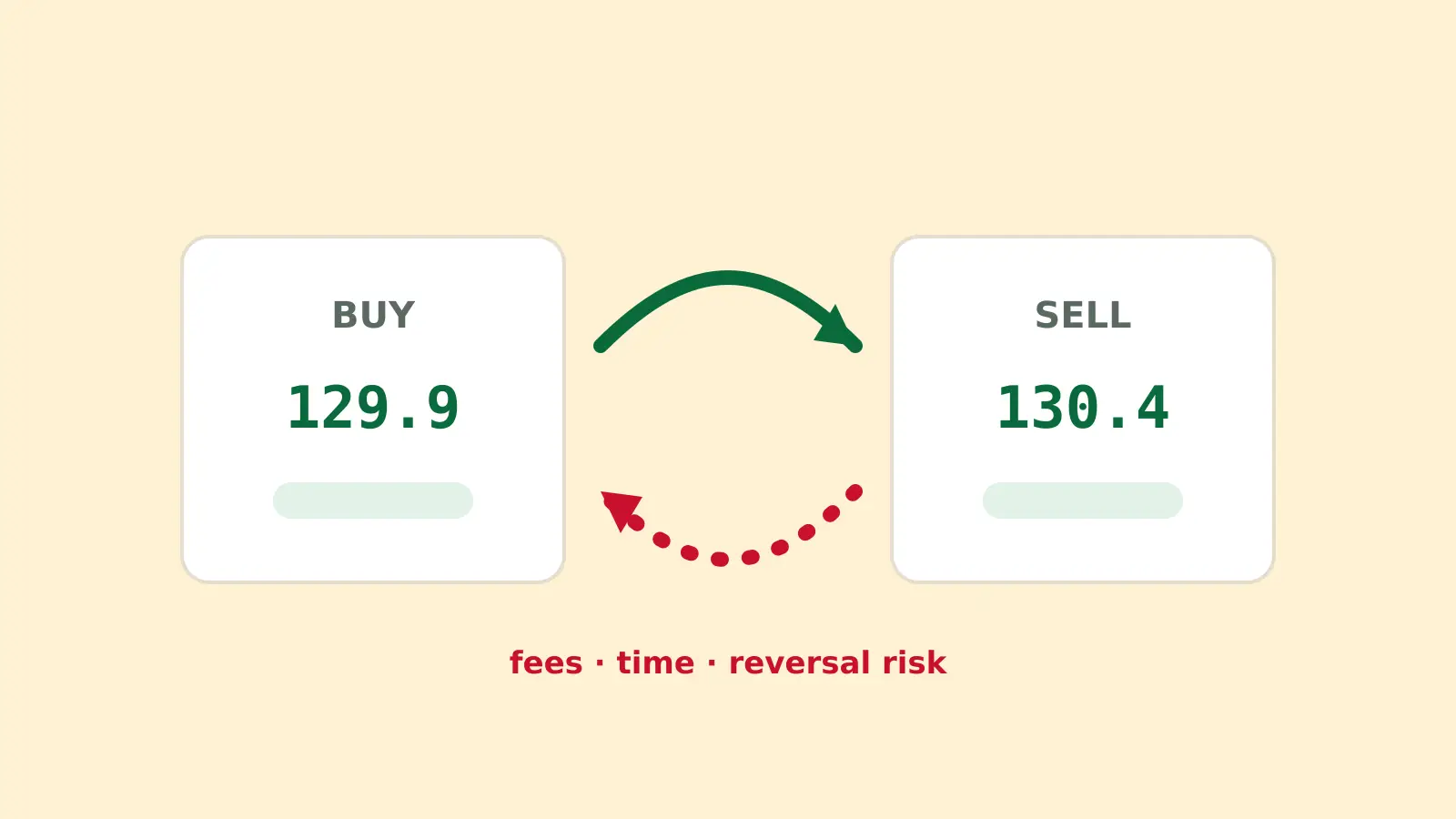
Maker arbitrage means posting your own ads — a buy ad a little below the market and a sell ad a little above — and waiting for other people to trade with you. You earn the SpreadThe gap between the buying price and the selling price. If USDT sells at KSh 131 and buys at KSh 128, the spread is KSh 3. Glossary between your two prices. This is what Kenyan P2P Verified merchantA P2P trader who passed extra checks and posts many ads. Usually faster and safer than a brand-new account, but still not risk-free. Glossary do all day. It needs stock on both sides (shillings and USDT), fast replies, a good completion rate and patience.
A third version — buying on one platform and selling on another — exists too, but moving USDT between exchanges adds network fees and delays, and the price gaps between big KES markets tend to close quickly.
- Cheapest USDT sell ad (Binance, M-Pesa)
- KSh 130.32Snapshot, our last check
- Best USDT buy ad (Binance, M-Pesa)
- KSh 130.25Snapshot, our last check
- Instant round trip
- −KSh 0.07 / USDTBefore M-Pesa and platform fees
A worked example in KES
Here is one maker cycle with KSh 100,000 of capital. The prices are illustrative; the M-Pesa charges are Safaricom’s real tariffs.
| Step | Example | KES |
|---|---|---|
| Your buy ad fills at KSh 129.90 | 769.82 USDT bought | −100,000 |
| You pay the seller by M-Pesa, one transfer | Send Money, KSh 50,001–250,000 band | −108 |
| Your sell ad fills at KSh 130.50 | 769.82 USDT sold; receiving M-Pesa is free | +100,461 |
| Gross spread | 0.60 per USDT (0.46%) | +461 |
| Profit if the platform fee is 0% | 461 − 108 | +353 |
| Profit if the fee is 0.1% on each side | 353 − about 200 | +153 |
Binance’s merchant guidelines say P2P fees range from 0% to 0.35% depending on the fiat market, with 20–50% discounts for verified merchants; Binance does not publish the KES rate in that document, which is why we show two scenarios. Check the fee shown when you post an ad.
KSh 150–350 for a cycle that might take an hour or two of chatting, checking M-Pesa and releasing coins is not nothing. But it assumes everything goes right. Change one assumption and the picture flips.
| Same KSh 100,000 cycle | Best case | Five sellers | Ten small sellers |
|---|---|---|---|
| How you pay sellers | 1 transfer: KSh 108 | 5 × KSh 20,000: KSh 525 | 10 × KSh 10,000: KSh 900 |
| Spread you capture | 0.46%: KSh 461 | 0.30%: KSh 300 | 0.30%: KSh 300 |
| Platform fee (0.1% each side) | about KSh 200 | about KSh 200 | about KSh 200 |
| Result | +KSh 153 | −KSh 425 | −KSh 800 |
The middle and right columns are common because sellers on your buy ad come in all sizes, and each payment you make carries its own Safaricom charge. Our M-Pesa charges calculator shows how fast small transfers add up.
Where the margin goes
Every cycle leaks money in the same few places.
| Leak | How big | Why it happens |
|---|---|---|
| M-Pesa Send Money charges | KSh 57–108 per payment above KSh 3,500 | You pay each seller separately |
| Agent withdrawals | KSh 115–309 per withdrawal above KSh 7,500 | If you ever need cash |
| Platform fees | 0–0.35% per side on Binance, by market | Charged on your ads |
| Price moves | The KES price of USDT shifts while you hold stock | You may sell below what you paid |
| Idle capital | Money waiting in M-Pesa or USDT earns nothing | Ads do not fill instantly |
| Reversals and fake payments | Whole order amounts | You release before money is safe |
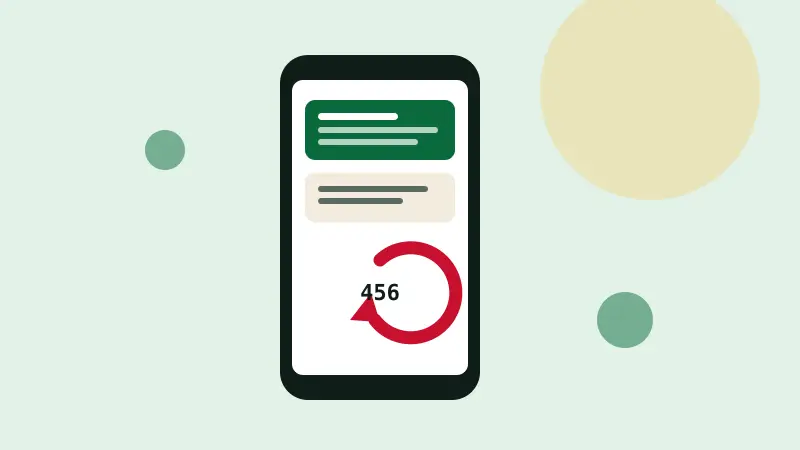
The last line is the one that ends arbitrage careers. Safaricom’s self-reversal service lets a sender forward a confirmation SMS to 456 within 24 hours and recover money from a recipient who still has the balance. A dishonest buyer can pay you, collect USDT and reverse. At KSh 353 profit per good cycle, losing one KSh 20,000 order takes 57 clean cycles to earn back. Our M-Pesa reversal scams guide shows how sellers defend themselves.
Safaricom’s limits also cap the business. Each M-Pesa transaction tops out at KSh 250,000, your balance at KSh 500,000 and your daily transactions at KSh 500,000, so turnover through M-Pesa alone is limited no matter how good your ads are.
Not every crypto plan needs P2P volume
If you simply want to hold some USDT or Bitcoin, buy it on our top-ranked exchange and skip the daily M-Pesa juggling.
Account freezes and third-party money
An arbitrage trader receives M-Pesa from dozens or hundreds of strangers. Some of that money will, sooner or later, be the proceeds of a fraud — a stolen line, a fake investment scheme, a scammed relative. You will not know, but the money trail leads to you.
That is what happened in Kenya in 2026. In April, the DCI asked Binance to restrict a number of Kenyan accounts, and Business Daily reported users being told their account was “restricted at the request of law enforcement”. P2P traders were among those affected, and in May 2026 a P2P trader was reportedly arrested for allegedly receiving funds linked to a crypto fraud. Restricted accounts mean frozen USDT and frozen working capital, sometimes for months. Details are in our Binance Kenya review.
Platform rules make the same point. Binance’s guidelines say merchants must not take part in transactions involving illegal funds, and that a merchant who brings illegal funds onto the platform can be disqualified and lose their security deposit. Its user policy says the payer’s name must match their verified name, and that a party who uses Third-party paymentPaying from an M-Pesa line or bank account that is not in your own name. P2P rules forbid it and it is a common cause of frozen accounts. Glossary details bears the loss in a dispute.
- Refund — never release — any payment from a name that differs from the counterparty's verified name.
- Avoid counterparties with brand-new accounts and very few orders for large amounts.
- Never let anyone else use your M-Pesa line or exchange account, even a friend or chama member.
- Keep statements, order numbers and chats for every trade; they are your defence if your account is reviewed.
- Spread capital across platforms so one restriction does not stop you completely.
If I follow the platform rules, my account can never be frozen.
Following the rules lowers the risk and helps you win appeals, but law-enforcement requests can still restrict an account while an investigation runs. Treat any capital you keep on P2P as money you might not be able to touch for weeks or months.
Is it legal and taxable?
Legality. Owning, buying and selling crypto is not illegal in Kenya. The Virtual Asset Service Providers Act 2025 requires businesses that provide virtual asset services — exchanges, brokers, wallet providers and others — to be licensed by the CBKCentral Bank of Kenya. Under the VASP Act it licenses crypto wallet providers, payment processors and stablecoin issuers. Glossary or CMACapital Markets Authority. Under the VASP Act it licenses crypto exchanges, brokers and investment advisers. Glossary. Kenyan law has not publicly clarified at what point an individual trading full-time on someone else’s P2P platform counts as such a business, and we have not found a public register of licensed providers. Read our regulation guide and get advice if you are trading at scale.
Tax. Regular trading for profit is likely to be treated as a business, and business profits are taxable income in Kenya. The 3% Digital Asset Tax that applied from September 2023 was repealed; since 1 July 2025 the law charges a 10% Excise duty on VASP feesSince 1 July 2025, a 10% excise duty applies to fees that crypto service providers charge — not to the value of the crypto you trade. Glossary on fees that crypto platforms charge. That duty does not replace income tax on your own profits. Our crypto tax guide covers record-keeping and iTax.
Safer ways to earn from crypto knowledge
If you understand P2P well enough to consider arbitrage, there are lower-risk ways to use that knowledge:
- Get paid in USDT for real work. Freelancers, designers and developers invoice foreign clients in stablecoins and cash out once a month. See receiving USDT payments in Kenya.
- Help family receive money cheaply. Diaspora remittances in USDT can beat some transfer services; our guide to sending money to Kenya with crypto explains when.
- Use P2P only when you need it. Buying or selling a few times a month with careful checks keeps your exposure small.
- Learn before you scale. Start with our crypto for beginners guide, and if trading is the itch, read crypto vs forex in Kenya before you risk money on either.
Frequently asked questions
Is crypto arbitrage profitable in Kenya?
Is P2P arbitrage legal in Kenya?
Do I pay tax on arbitrage profits?
How much capital do I need for P2P arbitrage?
Why do arbitrage traders get their accounts frozen?
What is the difference between P2P arbitrage and a scam 'arbitrage bot'?
- Binance P2P — KES advertisements (snapshot)
- Binance — P2P Merchant Guidelines (fees, VIP discounts, disqualification)
- Binance — P2P User Transaction Policy
- Safaricom — M-PESA consumer tariffs and limits
- Safaricom — M-PESA Reversal
- Business Daily — Kenya freezes Binance accounts in money laundering purge (22 Apr 2026)